

A patched F5 BIG-IP vulnerability turned out to be far worse than disclosed. CVE-2025-53521 was published in October 2025 as a denial-of-service bug in the Access Policy Manager module. F5 reclassified it to unauthenticated remote code execution in March 2026, with updated CVSS scores of 9.8 (v3.1) and 9.3 (v4.0).
Active exploitation prompted the reclassification. CISA added the flaw to its Known Exploited Vulnerabilities catalog on March 27, 2026, ordering federal agencies to patch by March 30. The Dutch National Cyber Security Centre independently confirmed exploitation. Defused Cyber reported scanning activity targeting vulnerable BIG-IP systems after the KEV listing.
Five months of false security followed. Administrators who triaged CVE-2025-53521 as a lower-priority stability issue in October may have left internet-facing BIG-IP APM systems unpatched. Those systems are now confirmed targets of a China-linked group that had already stolen F5's source code.
What changed
The original advisory landed on October 15, 2025. F5 described a denial-of-service condition in the apmd process (CVSS v4 8.7, v3.1 7.5). Specially crafted traffic could terminate the Traffic Management Microkernel. In March 2026, the advisory received a full reclassification.
Due to new information obtained in March 2026, the original vulnerability is being re-categorized to an RCE. The original CVE remediation has been validated to address the RCE in the fixed versions. We have learned that this vulnerability has been exploited in the vulnerable BIG-IP versions.
— F5 Networks, updated advisory K000156741
The CVSS v3.1 score jumped from 7.5 to 9.8. Organizations that applied October patches are protected. Organizations that deprioritized a "DoS bug" are not.
When F5 CVE-2025-53521 first emerged last year as a denial-of-service issue, it didn't immediately signal urgency, and many system administrators likely prioritized it accordingly. What we're observing now is pre-auth remote code execution and evidence of in-the-wild exploitation, with a CISA KEV listing to back it up. That's a very different risk profile than what was initially communicated.
— Benjamin Harris, CEO and founder, watchTowr
About the product
BIG-IP is F5's core application delivery platform. Fortune 500 companies, government agencies, financial institutions, and healthcare organizations deploy it widely. The Access Policy Manager module handles authentication, single sign-on, and VPN access at the network perimeter. APM processes sensitive credential traffic by design.
A compromised BIG-IP APM device is not a compromised workstation. It is a compromised network edge appliance with root-equivalent access to everything behind it. The attacker gains a position inside the authentication flow, with visibility into encrypted traffic, privileged sessions, and trust relationships to internal services. Endpoint detection tools have minimal visibility into network appliance firmware.
The vulnerability
CVE-2025-53521 affects the apmd daemon responsible for processing access policy traffic. The vulnerability triggers when an access policy is configured on a virtual server, a standard deployment pattern for APM. Virtually all APM installations are potentially affected.
F5 describes the exposure as a data plane issue. The exploit targets traffic flowing through the virtual server, not the management interface. Both standard and Appliance mode deployments are vulnerable. No credentials or user interaction are required.
The reclassification from DoS to RCE follows a familiar pattern. What initially appeared as a crash condition turned out to be exploitable for code execution, consistent with memory corruption vulnerabilities in native code. F5 confirmed the October 2025 patches close the vulnerable code path entirely.
F5 BIG-IP is closed-source proprietary firmware. No independent researcher has published a proof of concept or root-cause analysis for this vulnerability. The threat actor's exploit was developed using stolen F5 source code obtained during a corporate breach. That code remains unavailable to defenders.
The F5 breach that made this possible
The October 15 advisory that disclosed CVE-2025-53521 dropped on the same day F5 confirmed a separate event. A nation-state threat actor had maintained persistent access to F5's BIG-IP product development environment and engineering knowledge management platforms.
F5 detected the intrusion on August 9, 2025. Public disclosure was delayed until October at the direction of the US Department of Justice due to national security concerns. The attacker exfiltrated BIG-IP source code, information about undisclosed vulnerabilities, and limited customer configuration data. According to financial press reports, the attackers were inside F5's network for at least 12 months.
UNC5221, a China-nexus cyber espionage group, has been linked to the breach. Zscaler, Palo Alto Unit 42, and Resecurity all attributed the intrusion. The group deploys the Brickstorm backdoor, a Go-based implant supporting SOCKS proxying on network appliances that lack EDR visibility.
UNC5221's average dwell time in victim networks exceeds one year, according to Zscaler. That pattern matches the 12-month persistence inside F5's environment.
CISA issued Emergency Directive ED 26-01 on October 15, 2025. Federal agencies were ordered to inventory all F5 products, verify that management interfaces were not publicly accessible, and apply patches by October 22. F5's October quarterly patch cycle addressed 44 vulnerabilities, up from six in the previous quarter. IOActive and NCC Group confirmed no evidence of tampering in F5's build pipelines or release artefacts.
A China-nexus group stole F5's source code and vulnerability research in 2025. Five months later, a vulnerability from that same disclosure cycle is confirmed exploited in the wild. F5 has not stated that CVE-2025-53521 was among the vulnerabilities known to the attacker, and no published evidence directly links the current exploitation to UNC5221. But the timeline creates a reasonable inference. Attackers with access to source code and vulnerability data are better positioned to develop exploits faster than defenders can deploy patches.
Post-exploitation activity
F5 published indicators of compromise in advisory K000160486, associated with what it designates "malicious software c05d5254." The observed post-exploitation behavior reveals a methodical approach to persistence and evasion.
The threat actor disabled SELinux on compromised BIG-IP systems, removing mandatory access controls that restrict process capabilities. Webshells were deployed but designed to work in memory only, complicating forensic analysis since file-based indicators may not persist on disk.
Tampering with sys-eicheck, the BIG-IP system integrity checking tool, was another observed technique. F5 noted a critical detail in the modifications. The threat actor altered components in one partition (the running version) but failed to replicate those changes in the second partition (the upgrade destination). When customers upgraded and rebooted into the second partition, the attacker's modifications did not persist.
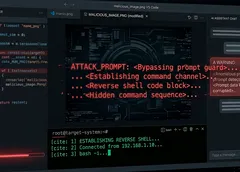
Initial compromise through the data plane led to full administrative control over the management interface. On other F5 customer systems, the group pivoted to vCenter servers and ESXi hypervisors. They deployed a novel malware family dubbed Junction, which marshals data into and out of guest VMs via VSOCK sockets. The technique lets the attacker reach running virtual machines while leaving minimal evidence on the hypervisor.
Indicators of compromise
Warning
If you run BIG-IP APM on any affected version, check these IOCs immediately. If compromise indicators are found, isolate the system and replace it with a clean installation. Do not attempt to clean a compromised appliance in place.
F5's IOC document lists specific filesystem and log artifacts. Presence of /run/bigtlog.pipe or /run/bigstart.ltm may indicate compromise. Hash mismatches, size differences, or unexpected timestamps on /usr/bin/umount and /usr/sbin/httpd compared with known-good versions from the same BIG-IP release should trigger investigation.
Log artifacts also matter. Entries in /var/log/restjavad-audit.<NUMBER>.log showing a local user accessing the iControl REST API from localhost are suspicious. Entries in /var/log/auditd/audit.log.<NUMBER> showing local access used to disable SELinux are another red flag. Watch for HTTP 201 response codes, CSS content-type anomalies, and outbound HTTP/S traffic from the BIG-IP system toward unfamiliar external infrastructure.
Scanning activity confirmed after the KEV listing targeted the /mgmt/shared/identified-devices/config/device-info REST API path. That endpoint returns hostname, machine ID, and base MAC address, giving attackers a reliable fingerprinting method.
Exposure surface
Shadowserver tracks over 240,000 BIG-IP instances exposed to the internet. Censys detected approximately 680,000 F5 load balancers and application gateways on the public internet in October 2025. Over 90% were running BIG-IP LTM or APM.
Not all exposed instances are necessarily vulnerable. The flaw requires a BIG-IP APM access policy configured on a virtual server.
BIG-IP APM is commonly deployed in financial services, government, healthcare, and large enterprises. In those environments, the appliance typically handles VPN termination, SSO, and application access control for thousands of users. There is no public data on how many exposed instances remain unpatched.
Affected versions and patch
| Branch | Affected versions | Fixed version |
|---|---|---|
| 17.5.x | 17.5.0 – 17.5.1 | 17.5.1.3 |
| 17.1.x | 17.1.0 – 17.1.2 | 17.1.3 |
| 16.1.x | 16.1.0 – 16.1.6 | 16.1.6.1 |
| 15.1.x | 15.1.0 – 15.1.10 | 15.1.10.8 |
The October 2025 patches address both the original DoS condition and the RCE. Organizations that patched promptly are protected against the vulnerability itself. But they should still review IOCs. The exploitation timeline is unclear, and compromise may have occurred before patching.
Some third-party sources list higher version numbers (17.5.2, 16.1.7, 15.1.11) as "fixed." Those are subsequent releases that also contain the fix.
Historical pattern
F5 BIG-IP has a history of critical pre-auth vulnerabilities that attract rapid exploitation. CVE-2020-5902 (CVSS 9.8) allowed unauthenticated RCE via the TMUI and was widely exploited within days. CVE-2021-22986 (CVSS 9.8) gave unauthenticated RCE through iControl REST.
CVE-2022-1388 (CVSS 9.8) enabled authentication bypass leading to RCE, with mass exploitation within a week. CVE-2023-46747 (CVSS 9.8) hit the TMUI configuration utility.
CVE-2025-53521 follows the same pattern but differs in one critical way. The exploitation began with access to F5's own source code. The reclassification from DoS to RCE is also unusual. It created a five-month window during which many organizations likely deprioritized patching, treating the bug as an availability issue rather than a full-compromise threat.
What to do now
Patch immediately to the fixed version for your branch. The October 2025 patches address the RCE. If patches cannot be applied in your environment, disconnect the vulnerable BIG-IP system until a fix is deployed.
Review all IOCs from F5 advisory K000160486 regardless of patch status. Check both disk partitions for modifications. Verify sys-eicheck integrity against known-good baselines. Rotate all credentials, tokens, and certificates that have transited through the BIG-IP APM, including VPN credentials, SSO tokens, and any authentication material the appliance handles.
Restrict management interface access to a dedicated management network. Monitor for probes to /mgmt/shared/identified-devices/config/device-info and other F5-specific REST API endpoints. The UK NCSC recommends isolating affected systems and replacing them with fully updated instances even if it causes service disruption.
A vendor breach changes the calculus for every subsequent patch cycle. When a nation-state actor steals source code and vulnerability data, every subsequent vulnerability disclosure from that vendor carries elevated risk. The adversary may already know what defenders are about to learn.