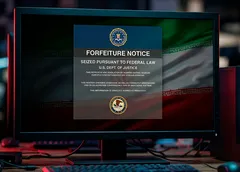
A US federal court has sentenced Tyler Robert Buchanan, a 24-year-old from Dundee, Scotland, to 72 months in prison for conspiring to hack into at least a dozen companies through text-message phishing and to steal more than $11.6 million in virtual currency from individuals across the United States. The Justice Department announced the sentence on November 17. Its release does not name the group, but security researchers have tied Buchanan and his co-defendants to Scattered Spider.
US District Judge John W. Holcomb handed down the sentence in Santa Ana, California, and set a restitution hearing for December 11. Buchanan pleaded guilty on April 17 to one count of conspiracy to commit wire fraud and one count of aggravated identity theft. He has been in federal custody since April 2025 and is the fifth and final defendant to be sentenced in the case.
From a text message to a drained wallet
According to the plea agreement, the scheme ran from September 2021 to April 2023. Buchanan and his co-conspirators sent hundreds of SMS phishing messages to employees of the targeted companies, posing as the employer or as a contracted IT or business process outsourcing supplier. The links led to fake login pages that collected usernames, passwords and personal information. A phishing kit built by the group forwarded the captured credentials to a Telegram channel administered by Buchanan and another conspirator.
With those credentials the group got into employee accounts and company systems and took confidential data, including names, email addresses, phone numbers and account credentials. That information was then used to identify people holding virtual currency and to get into their accounts and wallets.
To get past two-factor authentication, the conspirators carried out SIM swaps, fraudulently getting mobile carriers to reassign a victim’s phone number to a SIM card they controlled so that they could intercept codes sent by call or SMS. The targets included interactive entertainment, telecommunications and technology companies, IT and outsourcing suppliers, cloud communications providers and virtual currency firms. “Those thefts had severe, life-altering consequences for many victims,” prosecutors wrote in a sentencing memorandum.
Buchanan admitted that in April 2023, at his home in Scotland, he had files relating to numerous victim companies. A device found there also held the names and addresses of individual victims, including a text file with cryptocurrency seed phrases and login details for one victim’s account.
The other four defendants
Buchanan’s four co-defendants pleaded guilty earlier. Noah Michael Urban of Palm Coast, Florida, is serving a 10-year sentence. Ahmed Hossam Eldin Elbadawy of College Station, Texas, and Evans Onyeaka Osiebo of Dallas each received 45 months, and Joel Martin Evans of Jacksonville, North Carolina, two years.
The court dealt with one conspiracy and a specific set of thefts, not with every attack ever attributed to Scattered Spider. How much of the $11.6 million the victims will actually get back is a separate matter for the December restitution hearing.
For companies, the case is a reminder that a text with a link to a fake work login page is still enough to start a breach. For people holding cryptocurrency, it is an argument against relying on SMS codes alone: a hardware key or an authenticator app is not tied to a phone number that a carrier can be talked into moving.
Have a story? Become a contributor.
We work with independent researchers and cybersecurity professionals. Send us a tip or submit your article for editorial review.