

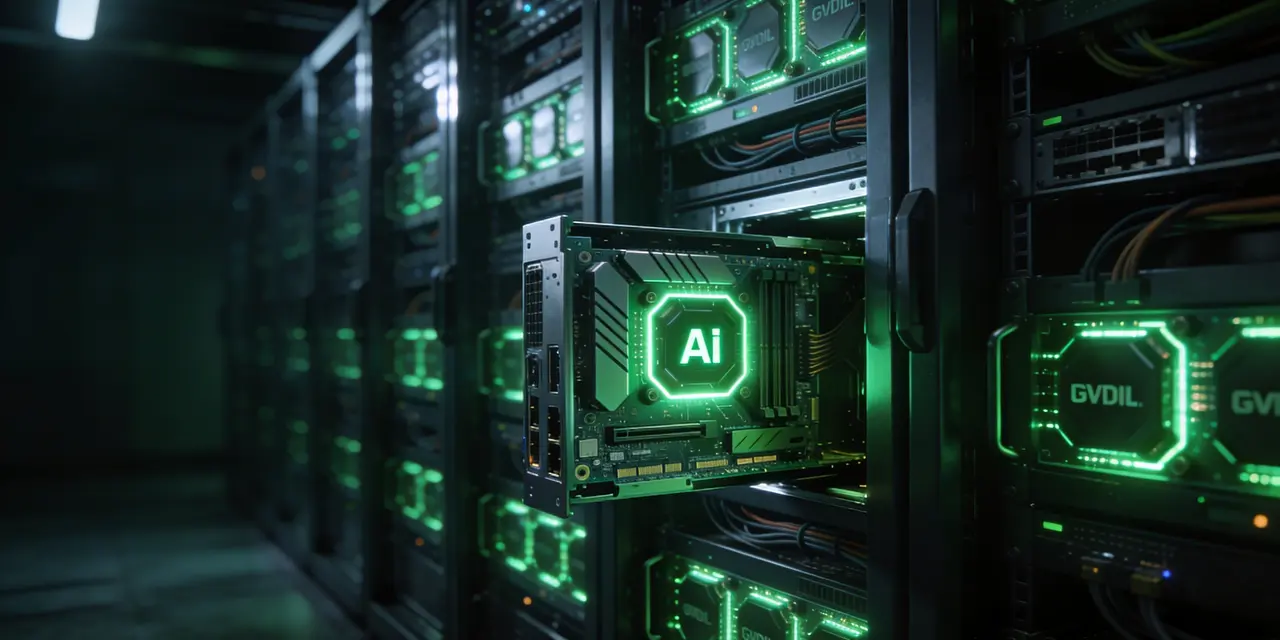
Yih-Shyan "Wally" Liaw, co-founder of Super Micro Computer, was arrested on March 19, 2026. The DOJ indictment charges Liaw (71), Ruei-Tsang "Steven" Chang (53), and Ting-Wei "Willy" Sun (44) with smuggling $2.5 billion in Nvidia AI servers to China.
Super Micro shares fell 25% on Friday.
A Southeast Asian shell company placed the orders. Identified only as "Company-1" in the indictment, it received servers assembled in the US with Nvidia AI chips under strict export controls. Company-1 repackaged them into unmarked boxes and forwarded them to China. Executives created false documents claiming the firm was the legitimate end user.
$510 million in servers moved to China in three weeks between late April and mid-May 2025. Prosecutors called the operation "brazen." The defendants coordinated through encrypted messaging apps, discussing quantities, delivery locations, and ways to hide the scheme.
To fool auditors, the defendants staged thousands of non-working "dummy" servers at Company-1's warehouses. The real servers had already shipped to China. Surveillance cameras caught Sun and an unnamed broker unboxing the fakes. They used a hair dryer to peel serial number stickers off the real packaging and reapply them to the dummy boxes. The same phony units later passed a US Department of Commerce inspection.
Sun sent photos and videos of the staged fakes to one auditor. That auditor never visited the site. He was off-site enjoying entertainment paid for by Company-1, according to the indictment. Chang arranged for an auditor he called "friendly" to conduct another review and blocked inspectors from parts of the data centers.
As alleged in the Indictment, the defendants participated in a systematic scheme to divert massive quantities of servers housing U.S. artificial intelligence technology to customers in China. They did so through a tangled web of lies, obfuscation, and concealment — all to drive sales and generate revenues in violation of U.S. law. Crimes involving sensitive technology must be met with swift action otherwise the law is meaningless.
— Jay Clayton, US Attorney, Southern District of New York
Liaw co-founded Super Micro in San Jose, California, in 1993 alongside CEO Charles Liang. He served as Senior VP of Business Development and a board member. He controls $464 million in Super Micro shares, according to FactSet. Liaw was arrested in California on Thursday and released on bail.
Chang, a Taiwanese citizen, ran Super Micro's Taiwan office and directed Chinese buyers to the scheme. Chang remains a fugitive. Sun, also Taiwanese, worked as a "fixer" and was arrested Thursday pending a bail hearing.
Liaw pushed Company-1 to adopt Nvidia's B200 chip (Blackwell architecture) in late 2024. "Roughly how many you can take by January, February, March, April?" he wrote to a Company-1 executive. "Then we can propose to [Nvidia] with the way they can accept."
A separate message in 2025 included a White House statement about an upcoming AI export rule. Liaw urged that shipments needed to accelerate before the effective date.
One broker sent Liaw a news article about Chinese nationals arrested for smuggling AI chips. Liaw responded with sobbing emojis.
Each defendant faces three counts. Conspiracy to violate the Export Controls Reform Act carries a maximum of 20 years. Conspiracy to smuggle goods and conspiracy to defraud the US each carry up to five years. The combined maximum is 30 years. Super Micro is not named as a defendant.
This operation is further evidence that China is aggressively stealing U.S. technology to help power its AI industry — which is unsurprising, given U.S. AI chips are far superior to any chips the Chinese can make.
— Chris McGuire, senior fellow for China and emerging technologies, Council on Foreign Relations
Super Micro placed Liaw and Chang on leave and fired Sun. The company said the alleged conduct "is a contravention of the Company's policies and compliance controls." Nvidia called diversion "a losing proposition across the board" and said it provides no service or support for such systems.
Liaw's history with Super Micro is turbulent. In 2018, the company's stock was suspended after it fell out of Nasdaq compliance during an SEC investigation. Liaw resigned all positions following an internal audit. In 2020, Super Micro paid a $17.5 million SEC penalty and its CFO resigned.
By May 2021, Liaw was back as an advisor. He rejoined as a full-time executive in August 2022 and returned to the board by December 2023. In August 2024, short-seller Hindenburg published a report alleging accounting manipulation, auditor Ernst & Young resigned, and BDO replaced them.
US restrictions on AI chip sales to China have been in place since October 2022. The Bureau of Industry and Security controls the exports. Nvidia dominates the AI accelerator market, and its GPUs are the target commodity. The DOJ did not name which chips were in the smuggled servers, but the B200 allocation reference points to Blackwell-generation hardware.
$2.5 billion passed through a single pass-through company in roughly 18 months. $510 million moved in three weeks. A co-founder of one of Nvidia's largest server partners allegedly ran the pipeline from inside the manufacturer. If insiders at this level can operate a smuggling scheme of this scale, the question for every compliance team in the AI supply chain is not whether export controls can be circumvented, but how many other leaks remain undiscovered.
The case is US v. Liaw, 26-cr-00100, Southern District of New York. Chang remains at large.
Have a story? Become a contributor.
We work with independent researchers and cybersecurity professionals. Send us a tip or submit your article for editorial review.